


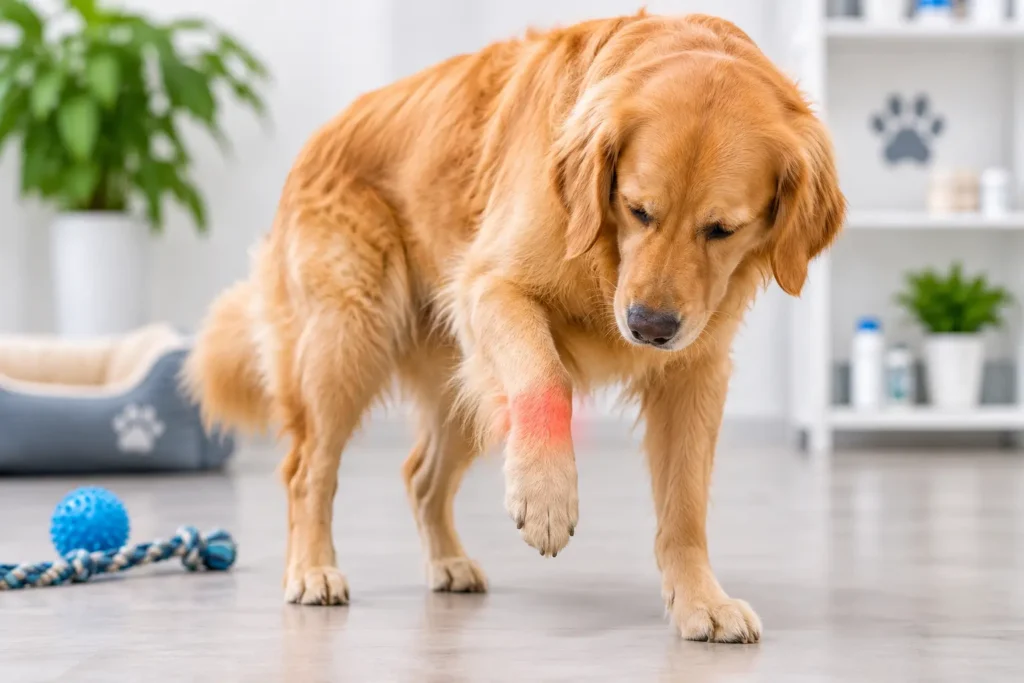
Why Is My Dog Limping? Most often it is caused by pain in the paw, a muscle or joint strain, or an injury, though arthritis, ligament tears and infections can also be behind it. A limp can be minor, like a thorn in the paw, or serious, like a fracture, so it helps to know what to look for. At Vets24, our Veterinary Clinic in Fujairah and Ras Al Khaimah sees limping dogs every day. This guide explains the common causes, the signs to watch for and when your dog needs a vet.
What Causes a Dog to Limp?
Dogs limp when something causes pain or stops a leg from working normally. Common causes include:
- Paw problems: cuts, torn nails, thorns, insect stings, or burns from hot pavement.
- Sprains and strains: soft tissue injuries from running, jumping or rough play.
- Arthritis and joint disease: wear and tear in the joints, or hip and elbow dysplasia (joints that did not develop normally).
- Cruciate ligament injury: a tear in a key knee ligament, a frequent cause of sudden back-leg limping.
- Fractures and dislocations: broken bones or joints knocked out of place.
- Infections: abscesses, infected bites or joint infections.
- Other causes: growth problems in puppies, bone disease and, less often, tumours.
Why Do Dogs Limp Suddenly?
A sudden limp usually points to an injury, such as a sprain, a foreign object in the paw, a sting or a ligament tear. Dogs are good at hiding pain, so a limp that seems to appear overnight may have been building for a while.
A limp that develops slowly, or looks worse after rest, is more often linked to arthritis or another joint condition, especially in older and larger dogs.
Common Symptoms Associated With Dog Limping
Besides an uneven walk, watch for these signs:
- Holding a leg up or putting little weight on it
- Swelling, heat or redness in a leg, joint or paw
- Licking or chewing at one paw
- Stiffness after rest, or reluctance to jump, climb stairs or play
- Whining, yelping or flinching when touched
- Changes in appetite, energy or behaviour
What to Do If Your Dog Is Limping
When your dog is limping, stay calm and stop all running and play. Look at the leg and paw for anything obvious, such as a thorn, a cut or swelling. Then decide how urgent it is. Severe signs need a vet straight away (see the emergency signs below). A mild limp can be watched closely at home for a day or two.
How to Treat a Limping Dog at Home
Home care is only suitable for a mild limp with no serious warning signs.
- Rest: Keep your dog calm and limit walks to short lead-only toilet breaks for 24 to 48 hours.
- Check the paw: Gently look at the pads, between the toes and around the nails for thorns, cuts or swelling.
- Clean small wounds: Rinse minor cuts with clean, lukewarm water.
- Use a cold compress: For a fresh swelling, hold a cloth-wrapped cold pack on the area for about 10 minutes.
- Keep your dog comfortable: Offer a soft, non-slip resting spot in a cool room.
Do not massage the leg, force your dog to walk or wrap the limb tightly. These can make an injury worse.
How to Help a Limping Dog Recover Safely
Once the limp eases, bring your dog back to normal activity slowly, starting with short, gentle walks. In the UAE heat, walk early or late in the day and avoid hot pavement. Use rugs on slippery floors, and keep your dog at a healthy weight to reduce strain on the joints. If the limp returns, book a check-up rather than waiting.
Can I Give My Dog Aspirin for a Limp?
No. Human painkillers such as aspirin, ibuprofen and paracetamol can be harmful to dogs. They can cause stomach ulcers, kidney damage and liver problems, even in small amounts.
Only give your dog pain relief that a veterinarian has prescribed for your dog. If your dog has swallowed any human medicine, contact a vet immediately.
When Should You Take Your Dog to a Veterinarian?
Go to a vet urgently, or use our emergency veterinary care, if your dog:
- Cannot put any weight on the leg
- Has a leg that looks bent, twisted or swollen
- Is bleeding heavily or has a deep wound
- Limps after a fall, a car accident or a fight
- Cries in pain, has a fever or seems very tired
Book a consultation if the limp lasts more than 24 to 48 hours, keeps coming back or gets worse. Puppies and senior dogs should be seen sooner. Our guide on how a veterinary clinic handles pet emergencies fast explains what to expect if you need urgent help.
How Vets Find the Cause
Your vet will watch how your dog walks and gently feel the leg, joints and paw. Depending on what they find, they may recommend X-rays, laboratory tests or further imaging to check for fractures, joint disease or infection.
Treatment Options
Treatment depends on the cause. It may include prescribed pain relief and anti-inflammatory medicine, wound care, antibiotics for infection, a bandage or splint, rest and controlled exercise, and weight management. Some injuries, such as fractures and ligament tears, may need orthopaedic care or surgery.
This article is for general information and does not replace a veterinary examination. If you are worried about your dog, contact a vet.
Frequently Asked Questions
1. Why is my dog limping but showing no signs of pain?
Dogs often hide discomfort. A mild strain, early arthritis or a small paw problem can cause a limp without obvious pain. If it lasts more than a day or two, have your dog examined.
2. How long should I let my dog limp before seeing a vet?
If the limp is mild, watch for 24 to 48 hours of rest. See a vet sooner if your dog cannot bear weight, is in obvious pain or the limp is getting worse.
3. Can a dog recover from limping without treatment?
Sometimes, if it is a minor strain or a small paw irritation. However, limping can also hide a ligament tear, arthritis or infection that will not heal on its own, so a check-up is the safe choice.
4. How can I help my dog walk comfortably again?
Give proper rest, then return to short, gentle walks. Use non-slip flooring, avoid hot ground and keep your dog at a healthy weight. Follow your vet’s advice on medicine and exercise.
5. Can I give my dog aspirin for a limp?
No. Aspirin and other human painkillers can seriously harm dogs. Only use pain medicine prescribed by your veterinarian.