

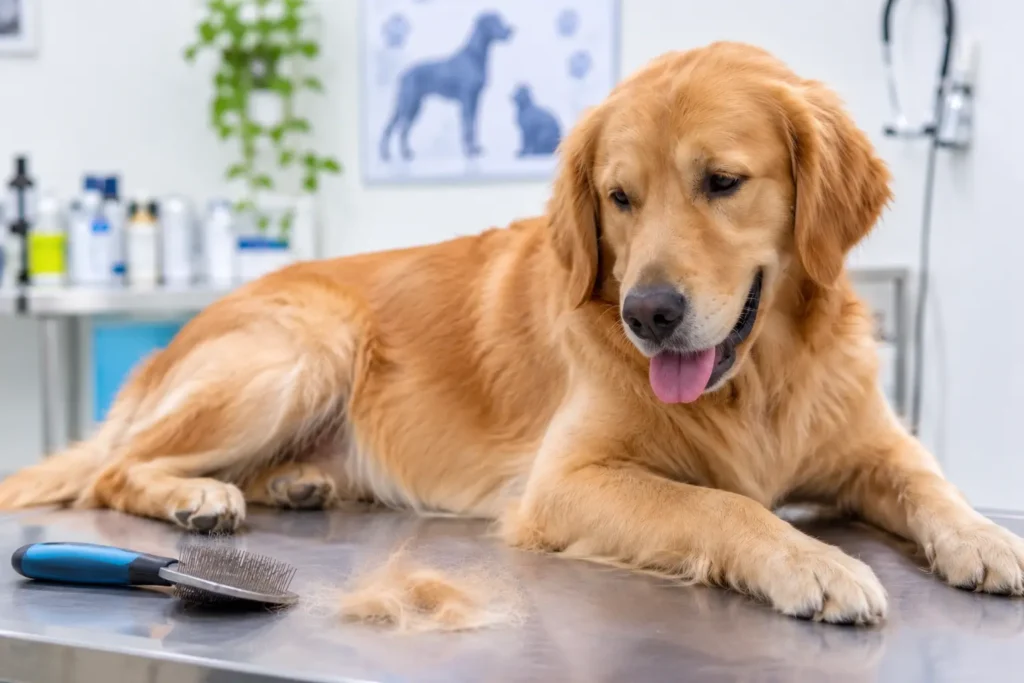

Shedding is a normal part of life with a dog, but heavy hair fall can leave owners worried. Understanding how to stop dog shedding starts with knowing why it happens and when it points to a health problem. Vets24, a Veterinary Clinic in Fujairah & Ras Al Khaimah, has put together this guide to explain why dogs shed, what you can realistically do at home, and when to ask a vet for help.
The honest answer is that you cannot stop shedding completely, because it is how a coat renews itself. You can, however, keep normal shedding manageable and recognise early when something else is going on.
What Is Dog Shedding and Why Do Dogs Shed?
Shedding is the natural loss of old or damaged hair so that new hair can grow. Most dogs shed lightly all year, and many have heavier periods when the weather changes. This is often called seasonal shedding.
The amount of hair your dog loses depends on:
• Breed and coat type: double-coated breeds such as Huskies and Labradors usually shed more.
• Season and environment: dogs living in air-conditioned homes may shed less predictably.
• Age, hormones and overall health.
• Diet and grooming routine.
Normal Shedding vs Excessive Hair Loss
Normal shedding is fairly even. You find hair on furniture and brushes, but the coat stays full and the skin looks healthy.
Excessive dog shedding or hair loss is different. Watch for:
• Bald patches or thinning areas
• Red, flaky, scabby or greasy skin
• Constant scratching, licking or chewing
• A sudden increase in shedding
• A dull, brittle coat
• Hair loss with tiredness, weight change or reduced appetite
Common Causes of Excessive Dog Shedding
Hair loss has many possible causes. The Merck Veterinary Manual’s guide to hair loss in dogs notes that infections, parasites and allergies commonly cause itching, and that itching should be investigated first when a dog is also losing hair.
Allergies
Food, pollen, dust and flea bites can all trigger itchy skin. Constant scratching then damages the coat. Our guide to summer pollen allergies in pets explains the signs to watch for.
Fleas, Ticks and Mites
Parasites irritate the skin and lead to scratching, biting and patchy hair loss. Regular checks matter, especially after walks.
Skin Infections
Bacterial or yeast infections often follow ongoing itching and can cause redness, odour and further hair loss.
Poor Nutrition
A diet lacking key nutrients can leave the coat dull and brittle, which may increase hair fall.
Underlying Health Problems
Hormonal conditions, stress and other illnesses can also affect the coat. These cannot be diagnosed at home.
Practical Ways to Manage Dog Shedding
Brush Regularly
Brushing removes loose hair before it lands on your floors and lets you check the skin.
1. Brush short coats about once a week and double coats several times a week.
2. Use a tool that suits the coat, such as a slicker brush, undercoat rake or grooming glove.
3. Brush gently and look for redness, bumps, fleas or ticks.
4. Brush before bathing, as wet hair tangles more easily.
Bathe and Groom Sensibly
Use a shampoo made for dogs, as human products can irritate canine skin. Avoid bathing too often unless your vet advises it, because it can dry the skin. Professional pet grooming can help with brushing, trimming and de-shedding treatments, especially for thick coats.
Support Coat Health Through Nutrition
Feed a complete, balanced diet suited to your dog’s age, size and activity level, and keep fresh water available, especially in the UAE heat. Speak to a vet before adding supplements such as fish oil or changing diets, particularly if your dog has skin problems.
Control Fleas and Ticks
Ask your vet which parasite preventive suits your dog, and use it consistently. Do not use products made for other animals.
Keep the Home Clean
Wash bedding weekly and vacuum often. Ask a groomer or vet before shaving a double-coated dog, as it can affect the coat.
When Should You See a Veterinarian?
Book a veterinary examination if you notice:
• Bald patches, sores or scabs
• Intense scratching or licking
• Shedding that suddenly increases or does not settle
• Skin odour, redness or ear problems
• Hair loss with lethargy, weight loss or appetite changes
Please do not give human medicines or start new supplements without veterinary guidance.
How Veterinary Advice Helps Identify the Cause
A vet will examine your dog’s skin and coat, ask about diet, parasite control and environment, then decide which tests are needed. These can include skin scrapes, skin sample tests or blood tests.
With dermatology care, allergies, infections and parasites can be assessed together instead of guessed at. Results from in-house laboratory testing can speed up diagnosis, and treatment then depends on the cause.
Final Thoughts
You cannot switch shedding off, but regular brushing, sensible grooming, good nutrition and parasite control keep it manageable. If the hair loss looks unusual or comes with skin changes, a veterinary check is the safest next step. Vets24 is happy to help at both branches.
Frequently Asked Questions
Can I stop my dog from shedding completely?
No. Shedding is how a coat renews itself. Regular brushing, good nutrition and parasite control can keep it manageable.
How often should I brush my dog to reduce shedding?
Short coats usually need brushing about once a week. Double-coated dogs often need it several times a week, especially during heavier shedding periods.
Does shaving a dog reduce shedding?
Not reliably, and shaving a double-coated dog can affect how the coat grows back. Ask a groomer or vet before clipping.
Can food help with dog shedding?
A complete, balanced diet supports a healthy coat. Speak to a vet before changing food or adding supplements such as fish oil.
When is a dog shedding a sign of a health problem?
See a vet if shedding comes with bald patches, red or flaky skin, constant scratching, or changes in energy, weight or appetite.