





Cat flu is a common, very contagious illness between cats — and most cats recover well with good care.
What is cat flu?
“Cat flu” is a cold-like illness of the nose, eyes, mouth and throat. It is usually caused by two viruses — feline herpesvirus and feline calicivirus — sometimes together with certain bacteria. It is very contagious between cats, but it is not the same as human flu and does not spread to people.
Most cats recover with supportive care, but kittens, older cats and cats with other illnesses can become seriously unwell, so it should never be ignored.
How do cats catch it?
Mainly through close contact with an infected cat — sneezing, grooming, or sharing bowls and bedding. The viruses can also be carried between cats on hands, clothing and cleaning equipment. It spreads most easily where cats live close together, such as shelters, catteries, multi-cat homes and among community street cats.
Many cats that recover become lifelong carriers — they look healthy but can flare up and become infectious again at times of stress, such as moving home, boarding or a new pet. This is normal and manageable.

Signs to watch for
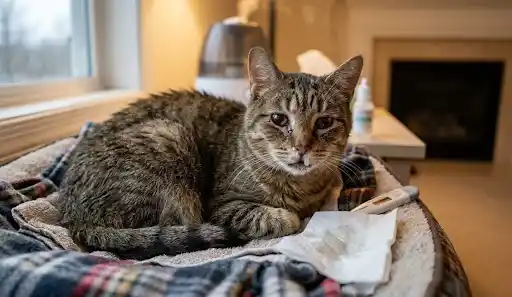
Signs usually appear within a few days and may include:Sneezing and a runny noseRunny, red or sore eyesDribbling, mouth ulcers or reluctance to eat because the mouth is soreLoss of appetite and low energyA high temperatureA cat with a blocked nose often stops eating because it can no longer smell its food — this is an important reason to seek help early.

| When to see a vet Contact us if your cat is not eating, is breathing with effort or open-mouthed, has a painful, cloudy or closed eye, or is a weak, unwell kitten. Early care makes a real difference, and eye problems in particular need prompt attention to protect your cat’s sight.Please call ahead before you arrive, so our team can keep your cat away from other patients. |

How is it diagnosed and treated?
We can usually recognise cat flu from an examination; in some cases we run a test to identify the exact cause. Because it is mostly viral, treatment focuses on supporting your cat while its own body fights the infection: fluids for dehydration, gentle cleaning of the eyes and nose, steam or nebulisation to ease congestion, pain relief for mouth ulcers, and warm, strong-smelling food to tempt the appetite.
Antibiotics are used only when a bacterial infection is involved — not for every runny nose — and a specific anti-viral medicine can help in more severe eye or herpes cases. Most cats improve within one to two weeks with good nursing at home or in the clinic.
How to protect your cat
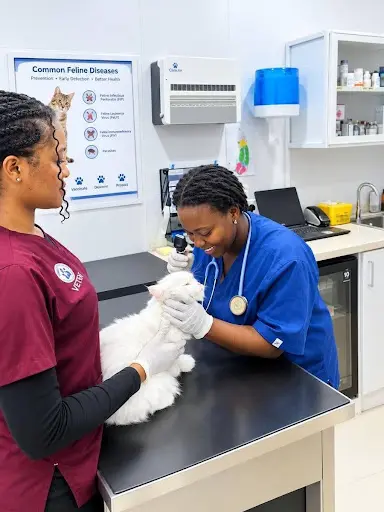
Vaccination is the single best protection. It greatly reduces how severe cat flu is, although it cannot prevent every infection.
Vaccinate kittens on schedule and complete the full course, then keep boosters up to date throughout your cat’s life — your vet will set the timing.
Reduce stress, especially around moving, boarding or introducing new cats, as stress can trigger a flare-up in carrier cats.
Keep a cat with active signs away from other cats, and don’t share bowls or bedding between them.
If a cat has been ill at home, ask us about the right way to clean and disinfect — ordinary wiping isn’t always enough.
The key points
- Cat flu is common and very contagious between cats — but usually treatable.
- Kittens and unwell or older cats are most at risk.
- It does not spread to people.
- Many cats become lifelong carriers and may flare up under stress — this is manageable.
- Vaccination reduces how serious it is; complete the course and keep boosters up to date.
- If your cat stops eating or an eye looks painful, see us promptly.
Protect your cat — book a vaccination today.
Our team is here to help, whether you’d like to start your kitten’s vaccinations or you’re worried about a cat that seems unwell. Contact your nearest Vets 24 branch to book an appointment.
This article is general information for cat owners and is not a substitute for professional veterinary advice. If you are worried about your cat, please contact your veterinarian.